How to Create a Social Media Screening Policy for Your Company
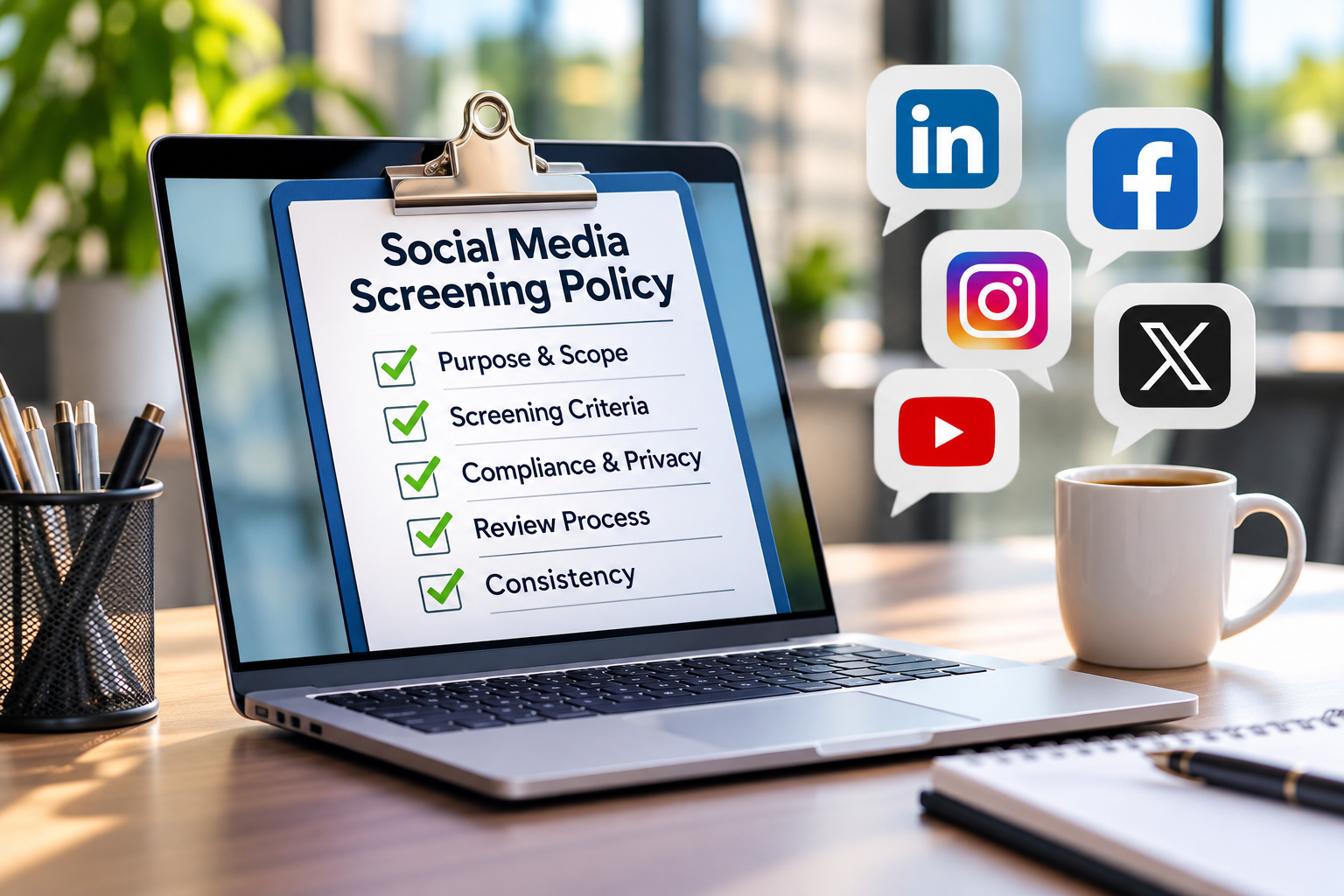
Social media has become part of everyday life. From professional networking to personal opinions and online interactions, individuals leave behind a digital footprint that can reveal information beyond a traditional résumé.
For employers, this raises an important question: Should social media play a role in the hiring process?
Social media screening can provide additional insights into publicly available online activity, but without clear guidelines, it can also introduce privacy concerns, inconsistent hiring practices, and potential compliance risks.
That is why having a social media screening policy is just as important as conducting the screening itself.
Whether your organization is considering social media screening for the first time or looking to improve its existing process, here are six steps to help establish a responsible and consistent policy.
1. Define the Purpose of Social Media Screening
Before implementing a social media screening policy, employers should determine what they hope to accomplish. The purpose should not be to investigate a candidate's personal life or make judgments based on individual beliefs, interests, or lifestyle choices.
Instead, social media screening should focus on identifying legitimate, job related concerns that may be relevant to the position. Depending on the role and applicable law, these might include credible threats of violence, potentially unlawful harassment, or other conduct directly relevant to workplace safety and responsibilities.
Clearly defining the purpose helps establish appropriate boundaries and prevents screening from becoming an overly broad review of someone's online presence.
2. Establish What Information Can and Cannot Be Considered
Not everything posted online is appropriate for an employment decision.
Social media profiles can reveal sensitive personal information, including religion, age, disability, and other legally protected characteristics. Employers should establish clear guidelines identifying what information is relevant to the position and what information must not influence hiring decisions.
For example, a concerning public statement involving a credible threat may warrant further review. However, someone's religious beliefs, family photographs, or personal interests should not be used to determine employment eligibility.
Employers should also recognize that online content can be misleading. Posts may be outdated, taken out of context, or incorrectly attributed to someone with a similar name.
A written policy should require careful review before any conclusions are drawn.
3. Determine When Screening Will Take Place
Consistency is essential when incorporating social media screening into the hiring process. Employers should establish when screening will occur, which positions will be subject to review, and how the process will be applied.
For example, an organization may decide to conduct social media screening at a defined stage of the hiring process for all candidates within certain job categories.
Whatever approach is selected, the criteria should be established in advance, applied consistently, and reviewed for compliance with applicable laws. Without a consistent process, employers risk treating similarly situated candidates differently or introducing unnecessary bias into hiring decisions.
4. Understand Privacy and Compliance Requirements
Social media screening involves more than simply searching for a candidate's name online.
Employers must consider federal, state, and local laws governing background screening, privacy, and employment discrimination. When social media screening is conducted through a Consumer Reporting Agency (CRA), the Fair Credit Reporting Act (FCRA) generally applies. This includes requirements related to disclosure, written authorization, and adverse action procedures when applicable.
Employers must also avoid discriminatory hiring decisions based on legally protected characteristics. Additionally, some states restrict employers from requesting access to private social media accounts or requiring applicants to disclose login credentials.
A well developed policy should address these requirements and be reviewed by qualified legal counsel before implementation.
5. Decide Who Will Review the Results
Who reviews social media information can be just as important as what information is collected.
Allowing hiring managers to browse candidates' social media profiles independently may expose them to personal information that should not influence employment decisions.
One approach is to use a qualified third party screening provider that can evaluate publicly available information according to defined screening criteria.
A structured process can help limit unnecessary exposure to protected information, support consistent reporting, and reduce the likelihood of personal opinions influencing the review. Employers should also establish who is authorized to access screening reports and how that information will be documented and securely maintained.
6. Establish a Process for Addressing Potential Concerns
Discovering concerning information online should not automatically result in a candidate being disqualified. A social media screening policy should explain how potentially relevant findings will be evaluated.
Employers should consider whether the information is accurate, whether it belongs to the correct individual, how recently the activity occurred, and whether it has a meaningful connection to the position.
Where appropriate, candidates should have an opportunity to address potential discrepancies or provide additional context.
If an employer considers taking adverse action based on a consumer report, the applicable FCRA procedures must be followed.
The goal is not to make assumptions about someone's character based on a single post. It is to support informed, fair, and consistent employment decisions.
Why a Written Social Media Screening Policy Matters
Without a defined policy, social media screening can quickly become inconsistent.
One hiring manager might search every candidate online, while another may never conduct a review. One employer might consider a questionable post a serious concern, while another may overlook it entirely.
A written policy helps establish expectations, define appropriate screening practices, and provide a consistent framework for evaluating results. It also helps employers balance the potential benefits of social media screening with the importance of privacy, fairness, and compliance.
Build a More Complete Hiring Process
Social media screening can be a valuable addition to an organization's background screening program, but it should not replace traditional screening methods or responsible hiring practices.
Criminal background checks, employment verifications, education verifications, and other screening services each provide different information. Social media screening offers another perspective, helping employers evaluate relevant publicly available online activity as part of a broader hiring process.
The key is having a clear policy that defines what you're looking for, how the information will be reviewed, and how it can appropriately influence hiring decisions.
With the right guidelines in place, employers can take a more consistent and informed approach to social media screening.
Disclaimer: This article is intended for general educational purposes and does not constitute legal advice. Employers should consult qualified legal counsel regarding applicable federal, state, and local requirements before implementing a social media screening policy.