Social Media Screening
Social Media Screening for Smarter Hiring Decisions
A candidate's online presence can reveal information that traditional background checks may not capture. VeriCorp's Social Media Screening helps employers identify potentially concerning public online activity, evaluate relevant behavioral risks, and make more informed hiring decisions.
Add another layer of insight to your background screening process while maintaining a focus on consistency, accuracy, and responsible hiring practices.
What Is Social Media Screening?
Social Media Screening is the process of reviewing publicly available online content to identify potential concerns relevant to employment.
Unlike traditional background checks, which focus on criminal records, employment history, and other verifiable information, social media screening examines a candidate's public digital footprint for potentially concerning behavior.
This may include public posts, comments, images, and other online activity across social media platforms and publicly accessible websites.
When used appropriately, social media screening can provide employers with additional context to support a more comprehensive hiring process.
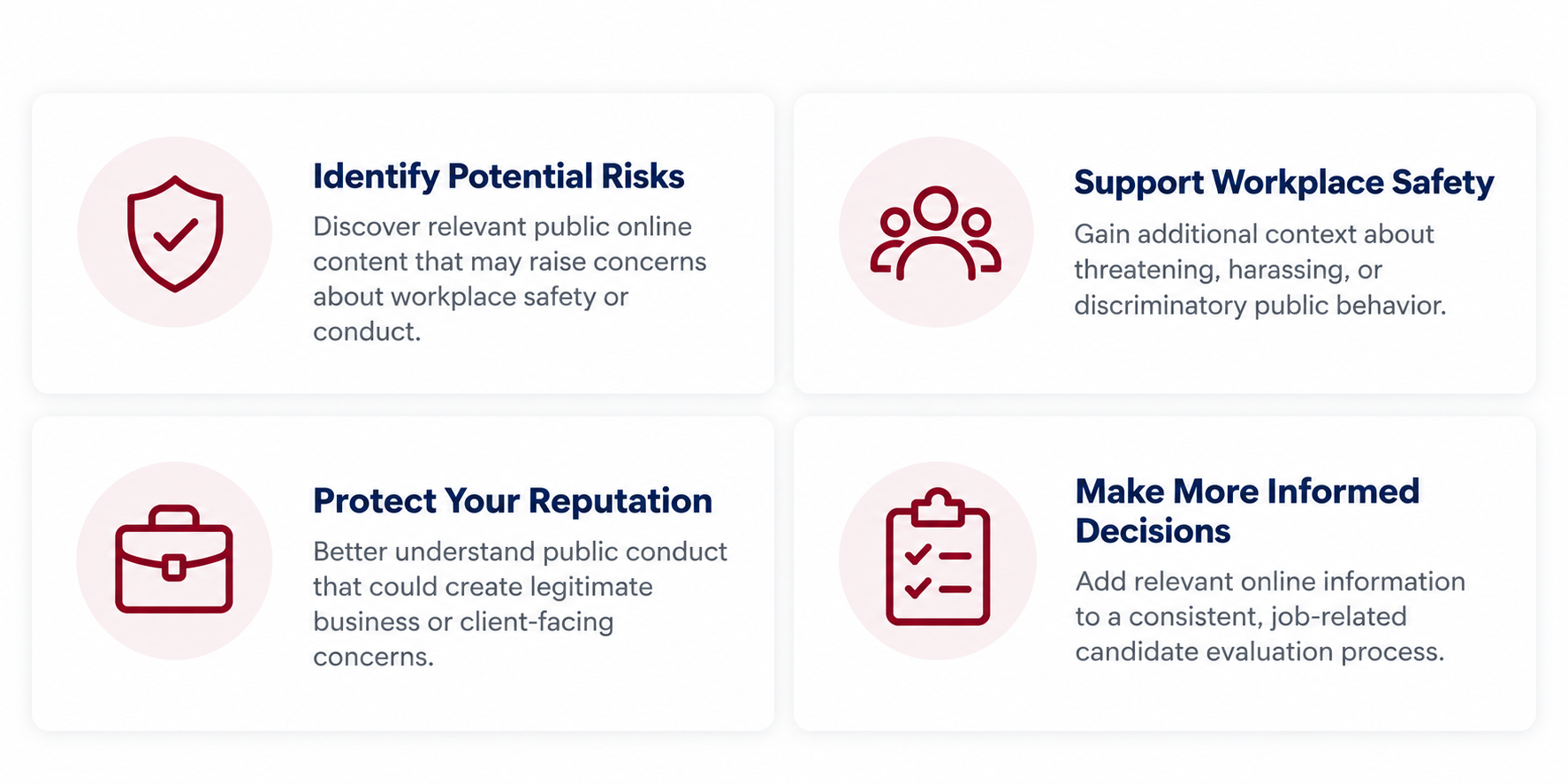
Why Should Companies Consider Social Media Screening?
What Can Be Identified Through Social Media Screening?
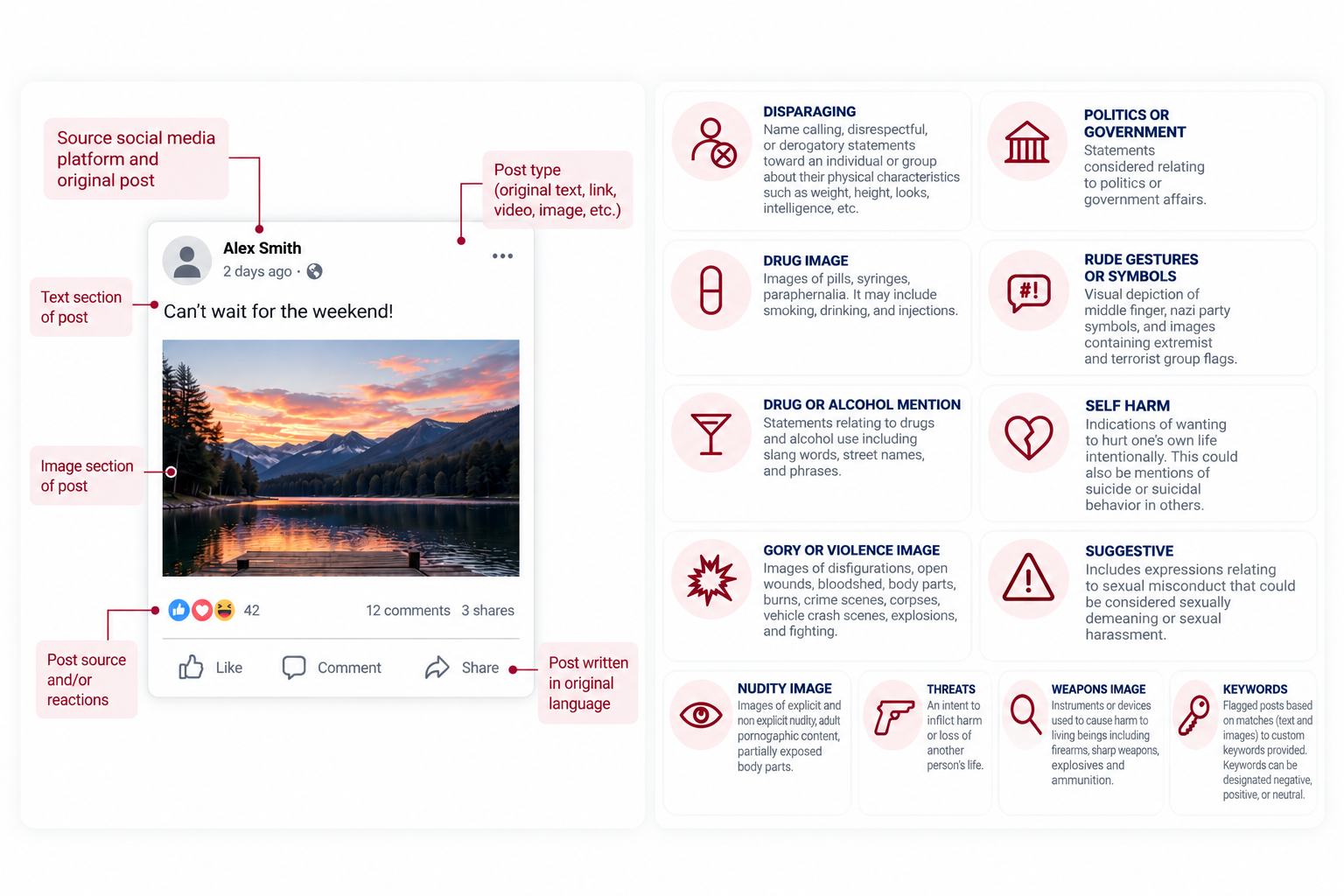
Every organization has different screening needs. VeriCorp's Social Media Screening reports are customizable, allowing employers to select the types of online behaviors and content they want to screen for. From threats and harassment to discriminatory language and other concerning activity, you can tailor your screening criteria to align with your organization's policies, industry, and hiring needs.
Social media screening can help identify publicy available content that may indicate one or more of the following behaviors. Below is an example of a social media post and the elements that are viewed.
Social Media Screening FAQs
Why not just check a candidate's social media yourself?
It may seem simple to search a candidate's social media profiles before making a hiring decision. However, conducting these searches internally can introduce unnecessary risks.
Exposure to Protected Information
Social media profiles may reveal personal details such as age, religion, disability, or other protected characteristics that should not influence employment decisions.
Inconsistent Screening Practices
Without a standardized process, one hiring manager may review a candidate's online activity differently from another, creating inconsistencies in the evaluation process.
Misidentifying Candidates
Similar names, fake accounts, and incomplete profile information can make it difficult to determine whether an online account actually belongs to the candidate being screened.
Missing Important Context
A single post, comment, or image may not tell the full story. Reviewing online content without appropriate context can lead to inaccurate assumptions.
Which industries rely on social media screening the most?
Social media screening can provide additional insight for organizations across a variety of industries, especially those hiring employees who represent their brand, work with vulnerable populations, or have significant public-facing responsibilities.
Healthcare & Education
Support hiring practices for positions involving patients, students, and other vulnerable populations.
Financial & Professional Services
Identify potentially concerning public conduct in roles involving sensitive information, client relationships, and professional responsibilities.
Hospitality & Customer-Facing Roles
Gain additional context for employees who regularly interact with customers, guests, and the public.
Nonprofits & Community Organizations
Support responsible screening practices for employees and volunteers who represent the organization's mission.
Executives & Leadership
Evaluate relevant public online behavior for highly visible positions with significant organizational responsibility.
Social media screening can complement traditional background checks across many industries, depending on the responsibilities and risks associated with each position.
Can social media screening be added to an existing background check package?
Social media screening can complement criminal searches, verifications, and other employment screening services. Contact VeriCorp to confirm available ordering and package options.
What laws affect social media screening?
- Fair Credit Reporting Act (FCRA): Disclosure, written authorization, and applicable pre- and post-adverse-action procedures for third-party reports.
- Federal employment discrimination laws: Title VII, the Americans with Disabilities Act, and other protections restrict decisions based on protected characteristics.
- State employment discrimination laws: May cover additional protected characteristics beyond federal law.
- State social media privacy/password laws: Many states restrict requests for access to password-protected accounts.
Should employers consider seeking advice from legal counsel related to social media checks?
Yes. It is reommended to consult with legal counsel because federal and state rules regulate background screening and use of social media information.
Can an employer reject a candidate based on social media screening results?
Employers should evaluate findings in context, consider job relevance, apply consistent policies, and comply with applicable employment and consumer reporting laws. When a third-party consumer report contributes to an adverse employment decision, applicable FCRA procedures must be followed.
Does social media screening access private accounts?
The proposed service focuses on publicly available content. Employers should not request private account credentials or attempt to bypass privacy controls.