4 Reasons Employers Should Avoid Conducting Their Own Background Checks
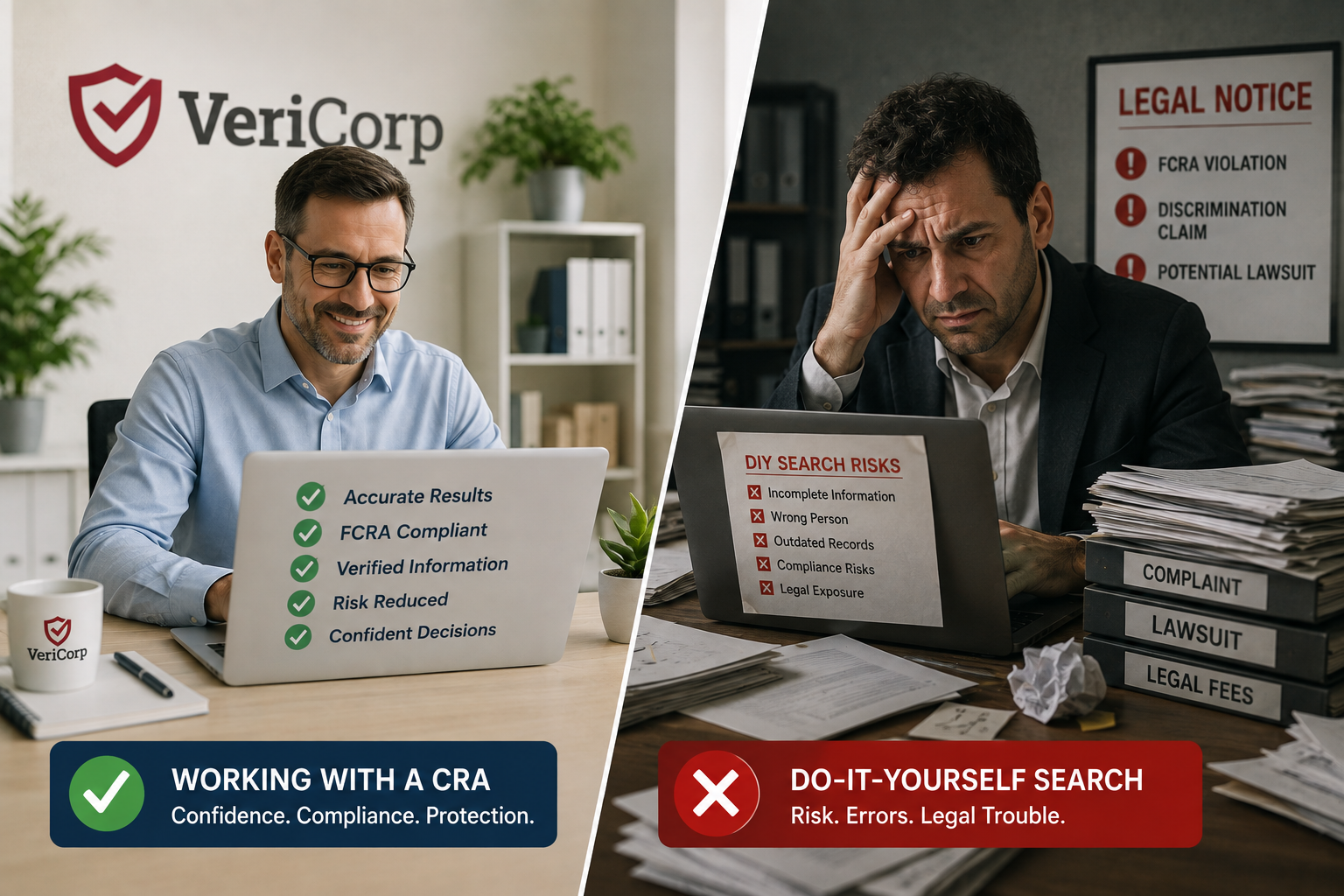
Conducting background checks is a critical part of making informed hiring decisions. Yet many employers still ask the same question:
"Why should I pay a Consumer Reporting Agency (CRA) when I can just look someone up online by myself?"
With public court portals and online search tools readily available, conducting a quick background search yourself may seem like an easy way to save money.
However, what many employers don't realize is that when you partner with a CRA, you are not simply paying for access to records. You are investing in legal compliance, accuracy, professional verification, and a structured process that helps protect both your organization and your applicants.
Here are four reasons employers should think twice before conducting background checks on their own.
1. Compliance and Legal Risks
Complex Legal Requirements: Employment background screening is governed by federal, state, and local laws that continue to evolve. Simply finding information online does not mean it can be legally used in an employment decision.
When employers use a Consumer Reporting Agency, the Fair Credit Reporting Act (FCRA) establishes important requirements that help protect both employers and applicants. These include providing a clear disclosure, obtaining written authorization before ordering a background report, and following the required pre adverse action and adverse action process when applicable.
Conducting your own online searches may also expose hiring managers to information that should never influence an employment decision, including:
- Age
- Religion
- Disability
- Family status
- Medical information
- Other legally protected characteristics
Once that information has been viewed, it becomes much more difficult to demonstrate that it played no role in the hiring decision.
Professional background screening providers help employers focus on information that is job related, legally reportable, and appropriate for employment decisions while providing a process that supports compliance.
Ban the Box Laws: Many states and municipalities have implemented "ban the box" laws that restrict when and how employers can inquire about a candidate’s criminal history. Navigating these varying regulations can be complex and risky for employers without specialized knowledge.
Privacy and Discrimination Issues: Improper handling of personal information can lead to privacy violations. Additionally, if background checks are not conducted uniformly, employers risk claims of discrimination. Professional screening companies are well-versed in these laws and can help mitigate such risks.
2. Accuracy and Reliability
A public court portal may display records, but it does not guarantee those records are complete, current, or even belong to your applicant.
Public records may include:
- Duplicate records
- Common name matches
- Missing case updates
- Dismissed charges
- Outdated information
- Records belonging to another individual
Professional background screening companies follow procedures designed to help ensure maximum possible accuracy by verifying identity, reviewing records carefully, and confirming information before it is reported.
The difference is simple. Finding information is easy. Verifying that it is accurate, complete, and belongs to the correct individual is where a CRA provides real value.
3. Time and Resource Intensive
While conducting your own background checks may appear inexpensive, it often requires significantly more time than employers anticipate.
DIY screening can involve:
- Searching multiple court systems
- Verifying identities
- Reviewing unfamiliar court records
- Interpreting legal terminology
- Staying current with changing regulations
- Managing documentation and hiring decisions
For HR teams and business owners, these responsibilities take valuable time away from recruiting, onboarding, employee development, and running the business.
Professional screening services often have the resources and systems in place to conduct background checks quickly and efficiently. This helps speed up the hiring process, allowing businesses to fill positions faster and more effectively.
4. Cost Implications
Poor hiring decisions resulting from incomplete or inaccurate information can lead to:
- Lost productivity
- Increased turnover
- Legal issues & expenses
- Negligent hiring claims
- Damage to your organization's reputation
- Time spent correcting preventable mistakes
Fines for non-compliance with background check regulations can be substantial, with some cases resulting in millions of dollars in penalties.
Partnering with a professional background screening company is an investment in the quality and safety of your workforce. It ensures that you are making informed hiring decisions that protect your business from the risks associated with inadequate screening.
Conclusion
While the idea of conducting your own background checks might seem appealing to cut costs, the potential risks and complications far outweigh the benefits. By outsourcing to a reputable background screening company, employers can ensure compliance with legal requirements, obtain accurate and reliable information, save time, and ultimately make better hiring decisions. This strategic move not only safeguards the business but also contributes to building a trustworthy and competent workforce.
Not sure where to start with background screening? Start by checking out this helpful guide on
How to Create a Background Screening Policy for Your Company.